
Chronic Obstructive Pulmonary Disease (COPD) is a serious lung condition that makes it hard to breathe. For many years, people thought of COPD as a disease that mostly affected older men. However, medical data shows that this is no longer true. Today, more women die from COPD than men each year.
Women experience COPD differently than men. Their symptoms can start earlier, feel more severe, and follow a unique pattern. Understanding the signs of COPD in women is essential for getting an early diagnosis and preserving lung health.
What is COPD and How Does It Affect the Lungs?
COPD is an umbrella term for a group of progressive lung diseases. Progressive means the condition worsens over time. The two most common types of COPD are chronic bronchitis and emphysema. Many people with COPD have a mix of both conditions.
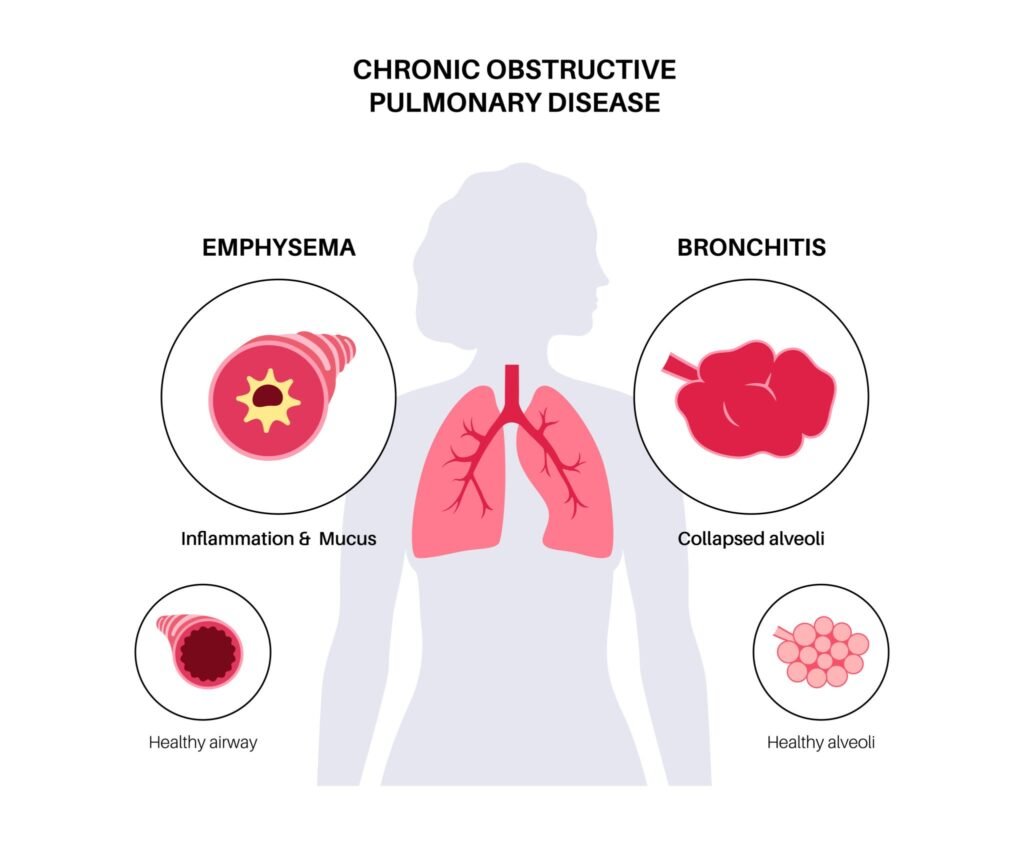
As shown in the medical diagram above, COPD damages the natural structure of the respiratory system:
- Chronic Bronchitis: This condition causes long-term inflammation and excessive mucus production in the bronchial tubes, which are the main airways leading to your lungs. This narrows the space inside the airways, making it difficult to move air in and out.
- Emphysema: This condition targets the alveoli, which are the tiny air sacs at the end of the airways. Emphysema destroys the fragile walls of these air sacs. Instead of many tiny, bouncy balloons that stretch and shrink easily, the air sacs turn into large, floppy pockets. This traps old air inside the lungs and prevents fresh oxygen from entering the bloodstream.
Primary Signs of COPD in Women
The early signs of COPD in women are often subtle. Many women mistake these early warnings for normal signs of aging, being out of shape, or having a mild case of asthma. Recognizing these symptoms early can lead to treatment that slows down lung damage.
1. Chronic, Persistent Cough
A primary sign of COPD is a cough that does not go away after a cold or respiratory infection. This is often called a “smoker’s cough,” but it can happen to anyone with lung damage.
In women, this cough may start as a dry, hacking irritation. Over time, the cough usually begins to produce mucus, also known as sputum or phlegm. This mucus may appear clear, white, yellow, or green. The cough is typically most severe in the morning right after waking up, as mucus collects in the airways overnight.
2. Shortness of Breath (Dyspnea)
Shortness of breath is the most common reason people seek help for COPD. At first, this feeling only happens during physical exertion, such as walking up a flight of stairs, carrying groceries, or gardening.
As the lung damage grows, the shortness of breath occurs during simple, daily activities. Everyday tasks like getting dressed, making the bed, or taking a shower can leave a woman feeling completely exhausted and breathless. In advanced stages, shortness of breath happens even while sitting still or resting.
3. Frequent Respiratory Infections
Women with COPD often experience a high frequency of lung infections. Because the airways are inflamed and choked with thick mucus, the lungs cannot clear out germs effectively.
As a result, common colds quickly turn into deep chest infections, such as acute bronchitis or pneumonia. If you find that you catch multiple chest colds every winter and take a long time to recover from them, it could be a sign of underlying lung irritation linked to COPD.
4. Wheezing and Chest Tightness
Wheezing is a whistling or squeaking sound that happens when you breathe out. It occurs because air is being forced through narrowed, irritated bronchial tubes.
Along with wheezing, many women report a feeling of heavy pressure or tightness across the chest. This chest tightness can make it feel like you cannot take a deep, satisfying breath, which can cause anxiety and worsen the feeling of breathlessness.
5. Chronic Fatigue and Low Energy
When your lungs cannot pull in enough oxygen, your entire body suffers from an energy shortage. Women with COPD often experience a profound, crushing fatigue that does not improve with a good night’s sleep.
Your muscles require oxygen to function properly. When oxygen levels drop, even simple movements feel incredibly heavy and difficult. Additionally, the physical act of working harder just to breathe burns extra calories, leaving very little energy for the rest of the day.
Unique Clinical Takeaways
While the basic symptoms of COPD can look similar across genders, women face distinct physical, societal, and medical challenges. These three unique perspectives highlight why COPD is different for women:
Greater Vulnerability to Tobacco Smoke and Toxins
Medical research shows that women’s lungs are biologically more sensitive to the damaging effects of cigarette smoke than men’s lungs. Even when a woman smokes the exact same number of cigarettes as a man, she is at a higher risk for developing severe COPD at an earlier age.
This increased vulnerability is partly due to anatomy. Women generally have smaller lungs and narrower airways than men. This means that tobacco smoke and environmental toxins become more concentrated within their lung tissues, causing greater inflammation and faster tissue destruction. Estrogen may also play a role by interacting with chemicals in smoke to speed up lung damage.
The Overlap and Misdiagnosis with Asthma
Women are significantly more likely to be misdiagnosed with asthma when they actually have COPD. Because asthma is common in women, doctors often assume that wheezing and shortness of breath are asthmatic signs.
While asthma and COPD both cause narrowed airways, they require different treatments. Asthma is an allergic, inflammatory response that can often be fully reversed with medication. COPD involves permanent structural damage to the lung tissue that cannot be reversed. Misdiagnosing COPD as asthma delays the proper therapies needed to preserve a woman’s remaining lung function.
Higher Prevalence of Anxiety and Depression
Living with COPD causes a heavy emotional toll, and studies show that women with COPD suffer from anxiety and depression at much higher rates than men with the same condition.
The physical sensation of being unable to breathe triggers a natural, primitive panic response in the brain. Over time, this fear of breathlessness can cause women to isolate themselves and avoid social activities or physical exercise. This isolation creates a painful cycle: less physical activity weakens the muscles, which makes breathlessness worse, leading to deeper anxiety and depression.
Causes and Risk Factors for Women
Understanding what causes COPD can help women assess their personal risk and take steps to protect their lungs.
Cigarette Smoking
Cigarette smoking is the leading cause of COPD around the world. This includes active smoking as well as long-term exposure to secondhand smoke. The toxic chemicals in tobacco smoke paralyze the tiny, hair-like structures called cilia that line the airways. Cilia are responsible for sweeping out mucus and dirt. When the cilia stop working, toxins stay trapped inside the lungs, causing permanent inflammation.
Environmental and Occupational Exposure
A significant number of women who develop COPD have never smoked a cigarette in their lives. Non-smoking women can develop COPD from long-term exposure to environmental air pollutants. This includes:
- Workplace hazards: Breathing in chemical fumes, industrial dust, or manufacturing fibers at work.
- Home environment: Long-term exposure to wood smoke or fumes from poorly ventilated cooking stoves and heating units.
- Outdoor pollution: Living in areas with high levels of urban smog or industrial air pollution.
Genetic Predisposition (Alpha-1 Antitrypsin Deficiency)
In rare cases, a genetic condition known as Alpha-1 Antitrypsin (AAT) Deficiency can cause COPD in women, even if they have never smoked or been exposed to toxins. AAT is a protective protein made by the liver that shields the lungs from damage caused by natural enzymes. If a woman’s body does not produce enough of this protein, her lung tissue can degrade quickly, often causing symptoms to appear when she is in her 30s or 40s.
How Doctors Diagnose COPD
If a woman shows signs of COPD, a doctor will use several specific medical tests to evaluate her lung health and confirm a diagnosis.
| Diagnostic Test | What It Measures | Why It Matters for Women |
| Spirometry | The total volume of air you can force out of your lungs, and how fast you can blow it out. | This is the gold-standard test for COPD. It catches airway obstruction before major symptoms even appear. |
| Chest X-ray / CT Scan | Visual images of the structural tissues inside your chest cavity. | These scans identify emphysema, rule out lung cancer, and show if the lungs are hyperinflated (trapping air). |
| Arterial Blood Gas (ABG) | The exact levels of oxygen and carbon dioxide present in your bloodstream. | This test reveals how efficiently your air sacs are transferring oxygen into your blood and removing waste gases. |
Treatment and Management Strategies
There is currently no cure for COPD, but a combination of medical treatments and lifestyle adjustments can manage symptoms, prevent flare-ups, and improve a woman’s quality of life.
1. Immediate Smoking Cessation
The single most effective step to treat COPD is to stop smoking immediately. Quitting smoking will not reverse existing lung scars, but it stops the rapid acceleration of the disease. It allows the remaining healthy lung tissue to work as effectively as possible.
2. Daily and Rescue Medications
Doctors prescribe specialized medications to help women with COPD breathe easier:
- Bronchodilators: These medications are typically taken through an inhaler. They work by relaxing the tight muscles around your airways, opening them up to allow better airflow. Long-acting bronchodilators are used daily to keep airways open, while short-acting rescue inhalers are used for sudden attacks of breathlessness.
- Inhaled Corticosteroids: These medications reduce the swelling and irritation inside the airway walls, lowering the risk of sudden symptom flare-ups.
3. Pulmonary Rehabilitation
Pulmonary rehabilitation is a specialized, structured program that combines supervised exercise training, breathing techniques, and nutritional counseling. Specialists teach women how to breathe more efficiently using techniques like pursed-lip breathing. The exercise portion strengthens the large muscles in the legs and arms, allowing the body to use oxygen more efficiently so the lungs do not have to work as hard.
4. Supplemental Oxygen Therapy
If a woman’s disease progresses to a point where her lungs can no longer pull in enough oxygen naturally, doctors may prescribe supplemental oxygen. This treatment delivers extra oxygen through a lightweight plastic tube that sits under the nose. Using oxygen as directed can protect vital organs, improve sleep quality, and provide more energy for daily activities.