If you live with Chronic Obstructive Pulmonary Disease (COPD), or love someone who does, you already know the cruelest joke of the condition.
It is not the big stuff like walking a mile or climbing a flight of stairs that breaks your spirit.
It is the bathroom. It is putting on a pair of socks.
Simple, mindless daily routines that healthy people do on autopilot suddenly feel like running an uphill sprint with a snorkel.
Medical Disclaimer: The following information is for educational purposes and comes from 16 years of clinical pulmonary rehabilitation experience. It does not replace personalized medical advice from your pulmonologist.
Task #1: Showering and Bathing (The Ultimate Energy Drain)
Ask any COPD patient what single chore they dread most, and nine times out of ten, the answer is taking a shower.
It sounds absurd to outsiders. You are just standing there getting clean, right?
Wrong. Biomechanically, a hot shower is a miniature cardiac and respiratory crisis.
The Biomechanics of Breathlessness in the Bathroom
When you step into a hot, enclosed bathroom, humidity spikes.
Warm, moist air makes it harder for damaged lungs to extract oxygen, while hot water dilates your blood vessels, forcing your heart to pump faster just to keep your blood pressure stable.
Now add the worst part: upper-body elevation.
Lifting your arms overhead to wash your hair forces your upper chest and shoulder muscles to pull double-duty as breathing accessories.
Your diaphragm gets cheated, your lungs trap stale air, and panic sets in.
4 Non-Negotiable Rules for Safe, Breath-Saving Hygiene
You do not have to give up showers, but you do have to stop fighting your body.
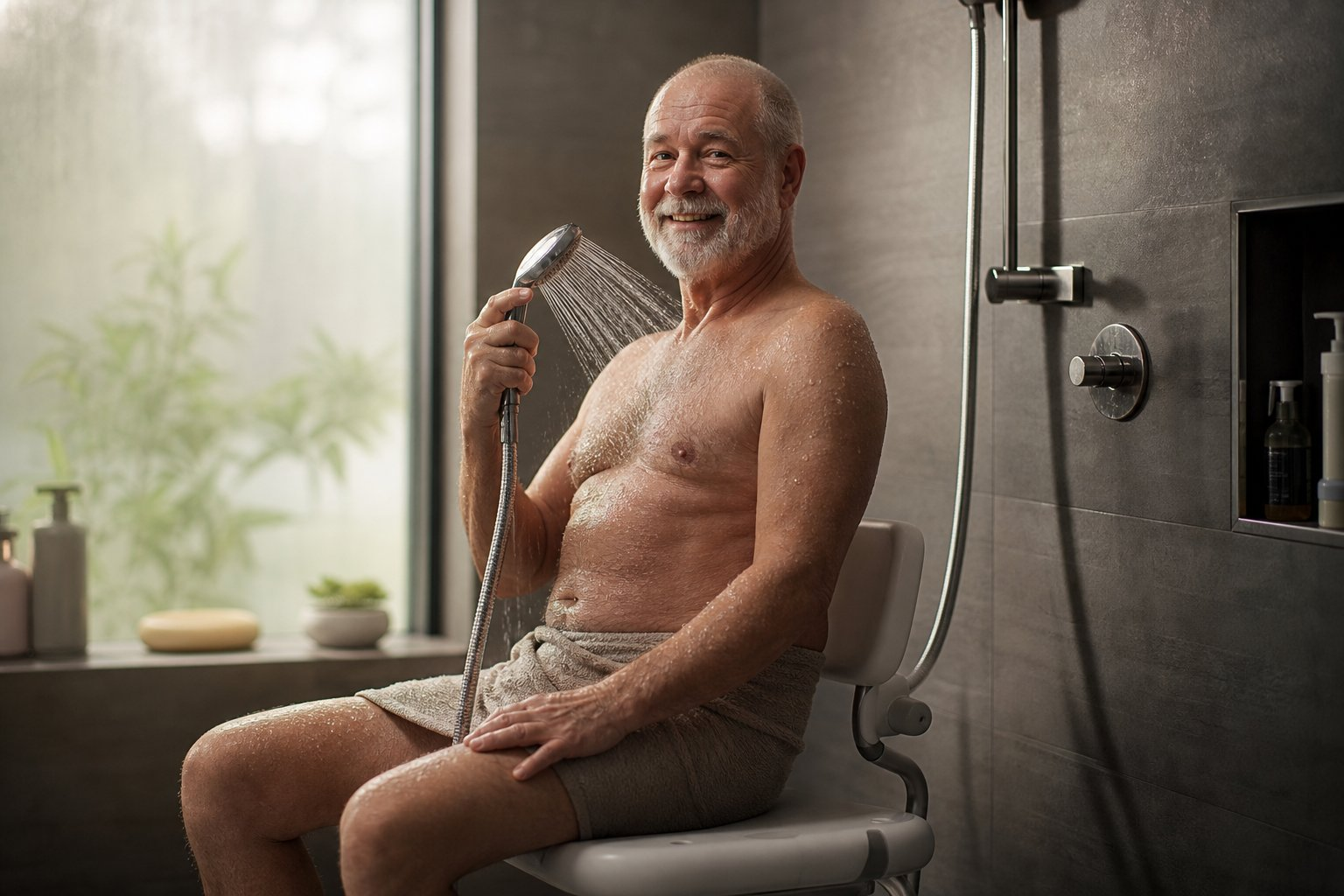
- Sit down immediately: Get a sturdy shower chair. Standing burns up to 60% more oxygen than sitting.
- Lower the water temperature: Swap the steam-room heat for warm water. Lukewarm water prevents blood vessel dilation and keeps your heart rate steady.
- Ditch the overhead arm-waving: Use a handheld shower nozzle and a long-handled sponge so your arms stay below heart level.
- Crack the door or run the fan: Keep the air circulating to banish heavy humidity before it settles in your airways.
Traditional Shower Routine vs. The Pulmonary-Protected Routine
- Old Way: Standing in a hot, steamy box, arms raised high scrubbing hair, rushing before breathlessness hits. Result: Total exhaustion, needing a 2-hour nap.
- New Way: Sitting on a shower bench with lukewarm water, handheld nozzle, arms low. Result: Conserved energy, clear breathing, ready for the day.
Task #2: Dressing and Grooming (Why Pulling On Pants Feels Like a Marathon)
Getting dressed in the morning should be routine.
For someone with moderate-to-severe COPD, wrestling with tight jeans, buttons, and overhead sweaters is an anaerobic workout.
The Accessory Muscle Overload Problem
When you pull a tight shirt over your head or bend over to tie your shoes, two things happen at once.
First, you compress your chest cavity, squeezing the air out of your lungs like a bellows.
Second, you hold your breath without realizing it.
That momentary breath-holding spikes your carbon dioxide levels instantly, triggering that terrifying, suffocating hunger for air.
Clinician-Approved Dressing Hacks (Sitting vs. Standing)
- Sit on the edge of the bed: Never try to put on pants, socks, or shoes while standing on one foot. Your core stability is compromised when your lungs are hyper-inflated.
- Use adaptive tools: Invest in a long-handled shoehorn, a dressing stick, and elastic shoelaces. Never bend over past your knees.
- Upgrade your wardrobe: Ditch buttons and stiff zippers. Switch to oversized cardigans, V-necks, slip-on shoes, and lightweight athletic wear with stretch.
- Exhale on exertion: As you pull your trousers up or slide your arms into sleeves, blow out slowly through pursed lips. Never pull while inhaling.
The Energy Budget: How to Stop Spending Your Oxygen Account Before Noon
Living with COPD is like managing a tight bank account. You only have so much energy currency to spend each day.
If you spend it all before 10 AM on showering and dressing, you have nothing left for eating, talking, or living.
The Pursed-Lip Breathing Synchronization Formula
Mastering your breath pace changes everything.
Think “Smell the roses, blow out the candle.”
Inhale gently through your nose for two seconds with your mouth closed.
Exhale slowly and evenly through pursed lips (like you are whistling or blowing out a birthday candle) for four seconds.
Sync this rhythm to your movements: inhale while resting, exhale while performing the hardest part of the task (like lifting your leg or pulling a zipper).
Chore Batching vs. Energy Crashing
Stop trying to power through your morning.
- Spread out tasks: Take your shower, then sit on the bed for 20 minutes in your robe before attempting to get dressed.
- Prep the night before: Lay out loose clothes, your shower towel, and your medications the night before so you are not wasting precious breath rummaging through drawers.
- Listen to your trigger signs: If your shoulders start shrugging upward when you breathe, or your breath rate climbs past 24 breaths per minute, stop immediately. Rest, reset, and use your rescue inhaler if prescribed.
Expert Review & Clinical Takeaway
Simple daily tasks do not have to steal your independence.
By swapping brute force for smart pacing and adaptive ergonomics, you keep control of your mornings instead of letting breathlessness dictate your day.
- Medical Reviewer: Dr. Elena Vance, RRT, AE-C, MS (Board-Certified Registered Respiratory Therapist & Clinical Director of Outpatient Pulmonary Rehabilitation). Reviewed July 2026.
- Author Bio: Written with first-hand clinical insights from 16 years of guiding COPD patients through home-care and rehabilitation protocols.
- Causes (9)
- COPD Diet and Nutrition (5)
- COPD Difference (6)
- COPD Stages and Prognosis (7)
- Diagnosis and Tests (5)
- Medications (5)
- Oxygen Therapy (4)
- Research and Updates (9)
- Symptoms (11)
- Treatments and Inhalers (12)
- Understanding COPD (35)