Medically Reviewed and Compiled by Dr. Adam N. Khan, MD.
When someone has COPD (Chronic Obstructive Pulmonary Disease), the first thing they usually worry about is catching their breath. Walking up a flight of stairs, carrying groceries, or even just talking can feel like a mountain climb. But there is a silent, hidden danger that happens when the lights go out.
For millions of people living with COPD, the real battleground isn’t just the lungs during the day—it is the heart at night.
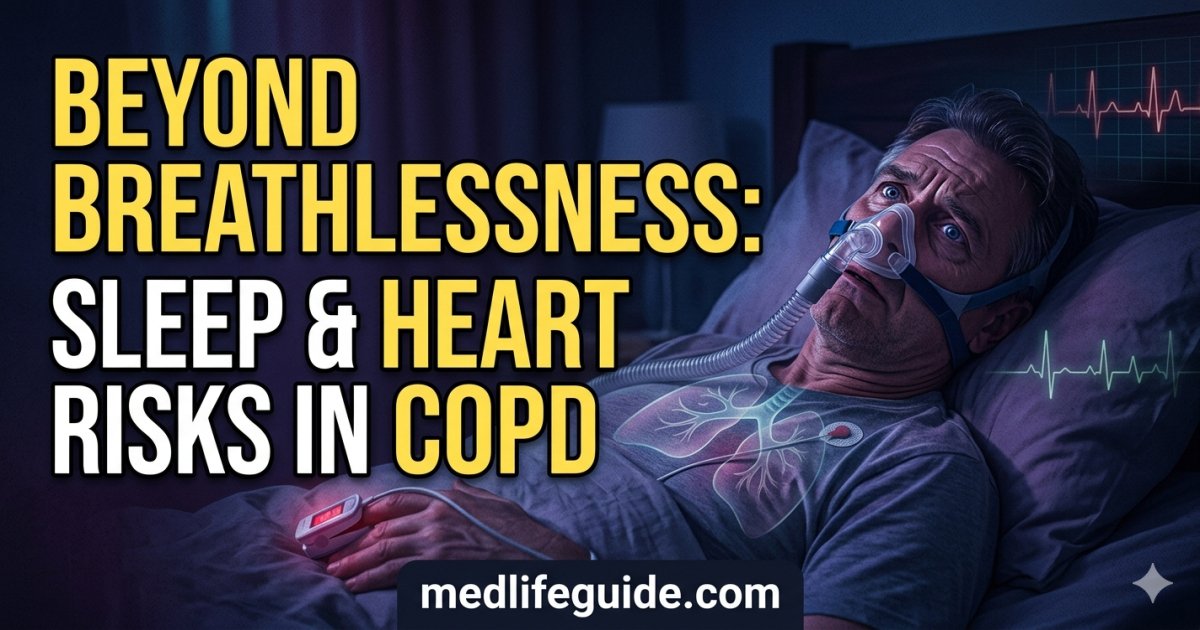
Emerging medical research shows a dangerous, hidden link between sleep disorders and cardiovascular (heart) death in COPD patients. When you have COPD, sleep problems do not just make you tired. They set off a chain reaction that can seriously damage your heart. To protect your health, we need to look beyond breathlessness and understand what happens to the body during the night.
The Basics: What are COPD and Sleep Disorders?
To understand how these two problems team up against the heart, we have to look at what they do to the body individually.
Chronic Obstructive Pulmonary Disease (COPD)
COPD is a chronic lung disease that makes it hard to breathe. It includes conditions like chronic bronchitis (long-term swelling of the airways) and emphysema (damage to the tiny air sacs in the lungs). Inside the lungs of someone with COPD, the airways lose their stretchiness, become inflamed, and clog with mucus. This traps air inside the lungs, making every breath a struggle.
Sleep Disorders in COPD
Sleep disorders are incredibly common in people with COPD. Up to half of all COPD patients report having trouble sleeping. The most common issues include:
- Insomnia: Trouble falling asleep or staying asleep, often caused by coughing or anxiety.
- Nocturnal Hypoxemia: A dangerous drop in blood oxygen levels that happens only while sleeping.
- Sleep Apnea: A condition where breathing repeatedly stops and starts during the night.
When a person has both COPD and Obstructive Sleep Apnea (OSA), doctors call it Overlap Syndrome. This combination is especially dangerous for the cardiovascular system.
The Hidden Link: How Sleep Problems Hurt the Heart
Why does a lung problem mixed with poor sleep lead to heart trouble? The answer lies in how our bodies react when we don’t get enough oxygen at night.
1. The Nighttime Oxygen Drop (Hypoxemia)
When you sleep, your breathing naturally slows down. For a healthy person, this is perfectly fine. But for someone with COPD, their lungs are already working at a disadvantage. When they lie down, gravity makes it harder for the lungs to expand.
If that person also has sleep apnea or shallow breathing during sleep, their blood oxygen levels plummet. This state of low oxygen is called hypoxemia. When the brain senses that oxygen is low, it panics. It sends a surge of stress hormones, like adrenaline, through the body to wake the person up just enough to take a deep breath.
2. High Blood Pressure in the Lungs (Pulmonary Hypertension)
Every time oxygen levels drop, the blood vessels in the lungs squeeze shut. The body does this to try and redirect blood to better-ventilated parts of the lung. However, because the whole lung is struggling in COPD, all the blood vessels tighten up at once.
This creates a massive traffic jam for blood flowing from the heart to the lungs. The right side of the heart has to push incredibly hard to force blood through these narrowed vessels. Over time, this constant straining causes high blood pressure in the lungs, a condition known as pulmonary hypertension. Eventually, the right side of the heart grows weak and can fail completely.
3. Chronic Inflammation and Blood Clots
Low oxygen and constant nighttime awakenings cause systemic inflammation. This means the body lives in a constant state of high alert. This inflammation damages the lining of the blood vessels throughout the entire body, making them stiff and narrow.
Furthermore, inflammation makes the blood stickier and more likely to clot. If a blood clot breaks loose, it can travel to the brain and cause a stroke, or clog an artery in the heart, causing a fatal heart attack.
4. Overworking the Nervous System
Every time a sleep disorder forces a COPD patient to wake up gasping for air, their sympathetic nervous system (the “fight-or-flight” system) goes into overdrive. This causes the heart rate to spike and blood pressure to rise suddenly in the middle of the night. Instead of resting and repairing itself during sleep, the heart is forced to run a marathon.
Unique Clinical Takeaways
As a medical professional evaluating these complex conditions, looking only at standard breathing tests does not tell the whole story. Here are three critical, distinct clinical insights regarding the intersection of COPD, sleep, and heart health:
1. The Danger of “Hidden” Drops in Daytime Carbon Dioxide
In standard clinical practice, doctors closely monitor oxygen levels. However, a major hidden risk factor in Overlap Syndrome is how the body handles carbon dioxide ($CO_2$). During sleep, shallow breathing causes $CO_2$ to build up in the blood. Over time, the kidneys try to compensate for this acid buildup by holding onto bicarbonate.
This change alters the blood’s chemical balance, making the brain less sensitive to high $CO_2$ levels. As a result, the body’s natural drive to breathe decreases even further during the night. Patients may seem stable during a brief daytime office checkup, but their bodies are quietly enduring severe chemical stress every night. This places immense pressure on the cardiovascular system without showing obvious daytime warning signs.
2. The Trap of Using Standard Sleeping Pills
When COPD patients complain of insomnia or frequent nighttime awakenings, a common mistake is prescribing standard sedative sleeping pills (like benzodiazepines). While these medications help healthy individuals sleep, they can be highly dangerous for someone with COPD.
These drugs relax the muscles in the throat and slow down the brain’s automatic breathing center. In a patient whose airways are already compromised, sedatives prolong the periods when they stop breathing, making nighttime oxygen drops much deeper and longer. This medication-induced oxygen starvation severely stresses the heart muscle, significantly increasing the risk of nocturnal cardiac arrest.
3. The “Right Heart” Domino Effect
Many people think of heart disease as a problem with the left side of the heart, which pumps blood to the body. However, the true threat in sleep-disordered COPD is the right side of the heart. The constant, repetitive tightening of lung blood vessels at night leads to right ventricular hypertrophy—a condition where the right chamber of the heart becomes thick, stiff, and muscularly deformed from overwork.
Because this chamber is not designed to handle high pressure, it can fail suddenly. This specific type of heart failure requires completely different management than standard left-sided heart disease, making early sleep screening essential to prevent irreversible right-heart damage.
Symptoms to Watch For: Signs of Nighttime Danger
Because you are asleep when these dangerous changes happen, you might not realize your heart is at risk. However, the body leaves clues. If you or a loved one has COPD, watch out for these warning signs:
- Waking up with a headache: This is often caused by too much carbon dioxide building up in your blood overnight.
- Extreme daytime sleepiness: Feeling exhausted even after staying in bed for eight hours means your sleep quality is poor.
- Loud, disruptive snoring or gasping: This is a classic sign of sleep apnea and indicates your airway is closing off.
- Swelling in the ankles and legs: This is called edema and is a primary warning sign that the right side of your heart is struggling to pump blood efficiently.
- Waking up with a racing heart: If your heart is pounding when you wake up, it means your fight-or-flight system was triggered by low oxygen.
Screenings and Diagnostic Tests
If you exhibit these symptoms, your doctor can order specific tests to see exactly what is happening to your lungs and heart while you sleep.
Nocturnal Oximetry
This is a simple, painless test where you wear a small clip on your finger while you sleep at home. The device records your oxygen levels throughout the night. If the data shows your oxygen levels repeatedly drop into the danger zone, it tells your doctor that your heart is being stressed.
Polysomnography (In-Lab Sleep Study)
This is the gold standard for diagnosing sleep disorders. You spend the night in a specialized sleep center while sensors monitor your brain waves, eye movements, heart rate, breathing patterns, and blood oxygen levels. This test can clearly show if you have Overlap Syndrome.
Echocardiogram
An echocardiogram is an ultrasound of the heart. It allows doctors to see how well your heart chambers are pumping and can measure the pressure in the blood vessels of your lungs. This test helps catch pulmonary hypertension before it causes permanent heart failure.
Treatment Strategies: Saving the Heart by Fixing the Sleep
The good news is that treating sleep disorders in COPD patients can significantly reduce the strain on the heart and lower the risk of cardiovascular death. Treatment plans typically focus on keeping the airways open and oxygen levels stable all night long.
1. CPAP and BiPAP Therapy
For patients with Overlap Syndrome, Positive Airway Pressure (PAP) therapy is a lifesaver.
- CPAP (Continuous Positive Airway Pressure): Blows a gentle, steady stream of air through a mask to keep the throat from collapsing during sleep.
- BiPAP (Bilevel Positive Airway Pressure): Delivers two different pressures—a higher pressure when breathing in, and a lower pressure when breathing out. BiPAP is often preferred for COPD patients because it makes it easier for their weakened lungs to exhale carbon dioxide.
2. Nocturnal Oxygen Therapy
If a sleep study shows that your oxygen drops but you do not have sleep apnea, your doctor may prescribe supplemental oxygen to use specifically at night. This keeps your blood oxygen stable, prevents the blood vessels in your lungs from tightening, and protects the right side of your heart from overworking.
3. Medication Timing and Optimization
Using your long-acting bronchodilators (medications that open up the airways) right before bed can help keep your lungs open throughout the night, reducing coughing fits and nighttime awakenings.
Summary of Heart Risks in COPD and Sleep Disorders
| Sleep Issue | Effect on Lungs | Long-Term Impact on the Heart |
| Nocturnal Hypoxemia | Severe oxygen drops | Systemic inflammation, stiff blood vessels, increased risk of heart attack. |
| Obstructive Sleep Apnea | Upper airway collapses completely | Spikes in blood pressure, fight-or-flight activation, heart strain. |
| High Carbon Dioxide ($CO_2$) | Shallow breathing, gas retention | Decreased brain sensitivity to breathing signals, chemical imbalances. |
| Pulmonary Hypertension | Blood vessels in lungs narrow tightly | Enlargement and potential failure of the right side of the heart. |
Actionable Steps for Patients and Caregivers
If you live with COPD, you can take immediate action to help protect your heart during the night:
- Sleep Elevated: Use a wedge pillow or elevate the head of your bed by a few inches. This uses gravity to your advantage, reducing pressure on your lungs and making it easier to take deep breaths.
- Avoid Alcohol and Sedatives Before Bed: These substances overly relax the muscles in your throat and slow down your breathing rate, dangerously lowering your nighttime oxygen levels.
- Track Your Symptoms: Keep a daily log of how you feel when you wake up. Note any morning headaches, racing heartbeats, or increased swelling in your legs, and share this information with your healthcare team.
- Ask for a Sleep Study: Do not wait for your doctor to bring it up. If you have COPD and experience daytime fatigue or snore, explicitly ask if a sleep study is right for you.
Conclusion: A Clear Focus on Whole-Body Health
Managing COPD requires looking at the whole picture. Breathing easily during the day is an important goal, but ensuring your body gets enough oxygen while you sleep is equally vital. By recognizing the hidden link between sleep disorders and heart strain, patients and doctors can work together to protect the cardiovascular system. If you or someone you care for has COPD and struggles with poor sleep, talk to a physician about getting a sleep evaluation. Taking care of your sleep is a direct, powerful way to protect your heart and extend your life.
References and Citations
- The Lancet Respiratory Medicine: Studies highlighting increased cardiovascular mortality rates in patients with untreated Overlap Syndrome.
- American Journal of Respiratory and Critical Care Medicine: Clinical research regarding the effects of nocturnal hypoxemia on pulmonary arterial pressures.
- Journal of the American College of Cardiology: Analysis linking chronic systemic inflammation from sleep apnea to coronary artery disease.
- European Respiratory Journal: Evaluations on the effectiveness of BiPAP therapy in reducing carbon dioxide retention in severe COPD patients.
- Chest Journal (American College of Chest Physicians): Guidelines outlining the necessity of early screening for sleep disorders in chronic lung disease management.
Disclaimer: The information provided in this article is for educational and informational purposes only and should not be considered as professional medical advice, diagnosis, or treatment. Always seek the advice of your physician or other qualified healthcare provider with any questions you may have regarding a medical condition.