Understanding COPD Symptoms
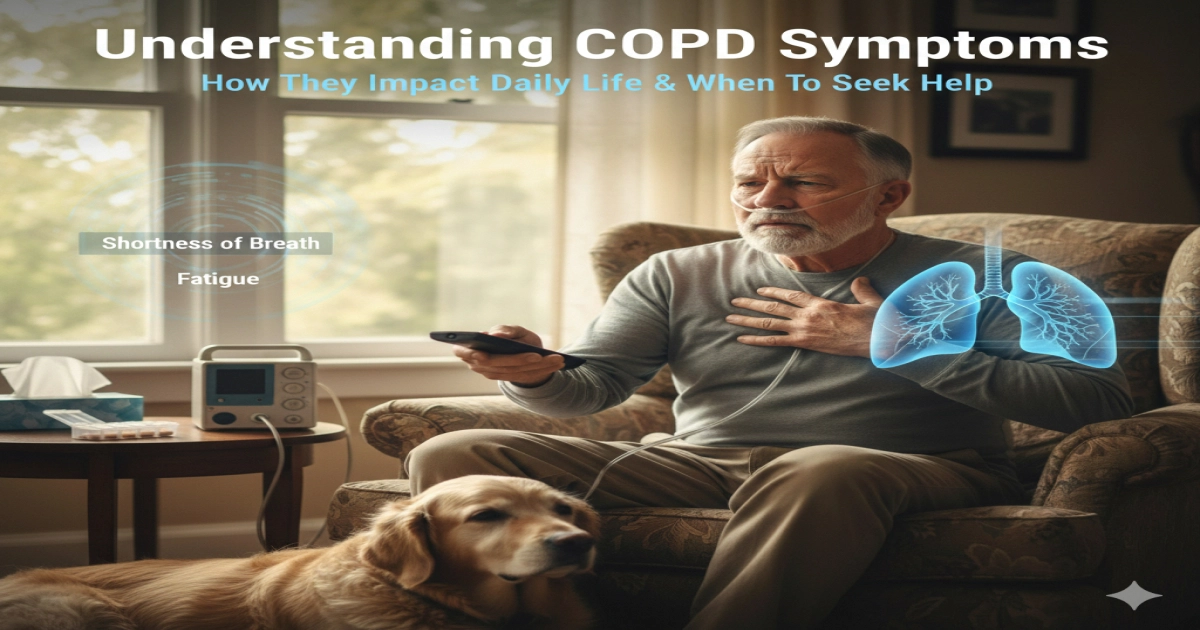
COPD symptoms have a big impact on daily life. They make it hard to breathe and limit what people can do. Those with COPD often experience:
Shortness of breath, even with simple activities like walking or showering
Frequent flare-ups triggered by:
Infections
Air pollution
Stress
Tiredness that disrupts daily routines
Additional Symptoms:
Changes in mucus production
Unintended weight loss due to decreased appetite
Cyanosis, which is a bluish tint to the skin caused by low oxygen levels
Feelings of anxiety or depression due to less alertness
Challenges of Daily Life with COPD
The hardest parts of COPD are the severe symptoms and flare-ups. Even simple tasks can be difficult, including:
Watching TV
Talking on the phone
Key Issues:
Extreme shortness of breath
Frequent and intense coughing spells
Increased mucus production
Constant fatigue that makes daily tasks hard
Difficulty fighting off infections, leading to serious problems like pneumonia
Progression of COPD Symptoms
As COPD worsens, symptoms can become life-threatening. Signs to watch for include:
Cyanosis, indicating low oxygen levels and possible lung failure
Fluid buildup, causing edema
Unintended weight loss due to the energy needed for breathing
Muscle wasting, making everyday tasks harder
Confusion or memory loss from lack of oxygen
Feelings of anxiety or depression
When to Seek Emergency Help
People with COPD need to recognize when to get emergency help. Signs that require immediate attention include:
Trouble breathing or talking
Bluish lips or nails, a sign of low oxygen levels
Fast heartbeat, indicating respiratory distress
Confusion or decreased alertness
Recognizing these warning signs and getting help quickly can improve the quality of life for those with COPD. Getting the right treatment can help manage symptoms effectively.