
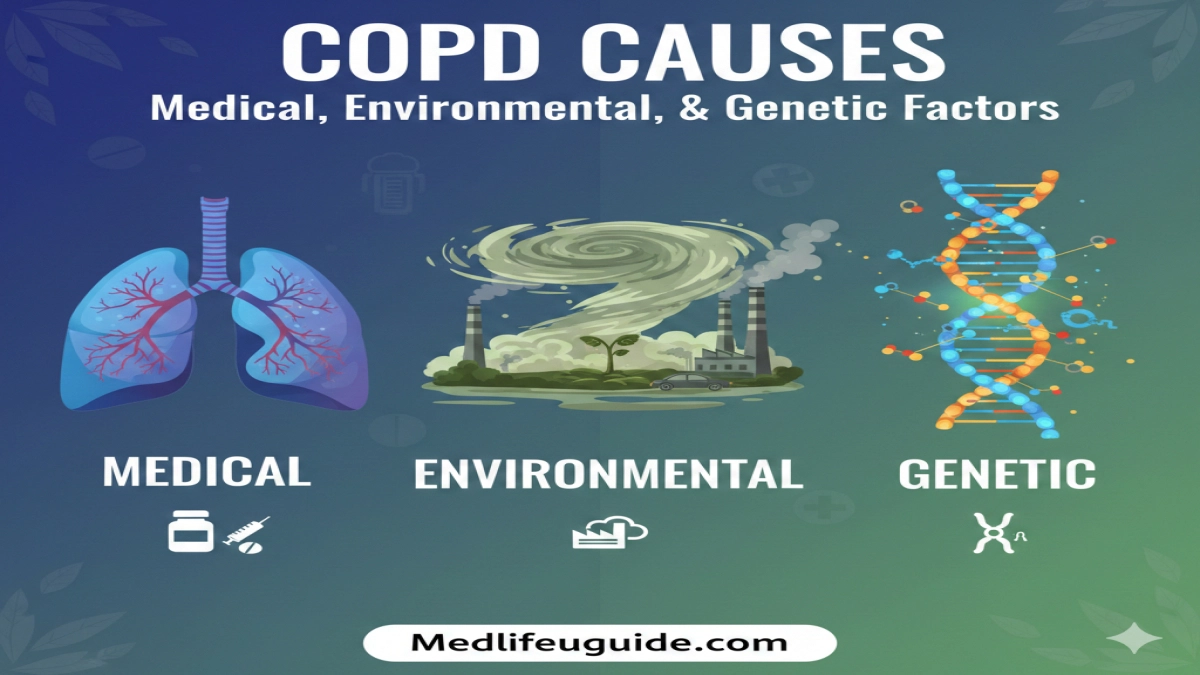
Chronic Obstructive Pulmonary Disease (COPD) is a progressive, irreversible lung disorder characterized by persistent airflow limitation and chronic respiratory symptoms. COPD is not caused by a single factor. Instead, it develops from prolonged exposure to harmful particles or gases combined with individual susceptibility factors. Understanding COPD causes is essential for prevention, early diagnosis, risk stratification, and disease management.
This article provides a comprehensive, evidence-based analysis of COPD causes, integrating environmental, genetic, occupational, and clinical risk factors with advanced clinical insights relevant to real-world patient care.
Table of Contents
ToggleWhat Is COPD?
COPD is a chronic lung disease that primarily includes:
Chronic bronchitis (airway inflammation and mucus hypersecretion)
Emphysema (destruction of alveolar walls and reduced gas exchange)
The disease is characterized by progressive airflow obstruction that is not fully reversible and worsens over time.
Primary Causes of COPD
Cigarette Smoking
Cigarette smoking is the leading cause of COPD worldwide.
Key mechanisms include:
Chronic airway inflammation
Oxidative stress damaging lung tissue
Impaired mucociliary clearance
Progressive alveolar destruction
Both active smoking and long-term cumulative exposure (pack-years) strongly correlate with COPD risk. Passive exposure to secondhand smoke also increases disease risk.
Environmental Air Pollution
Long-term exposure to polluted air is a significant non-smoking cause of COPD.
Major contributors include:
Outdoor pollution (PM2.5, nitrogen dioxide, sulfur dioxide)
Indoor biomass fuel combustion (wood, coal, dung)
Urban traffic-related emissions
Indoor biomass smoke exposure is a leading cause of COPD in low- and middle-income regions, particularly among women.
Occupational Dusts and Chemical Fumes
Workplace exposure contributes significantly to COPD development, even in non-smokers.
High-risk occupations include:
Mining
Construction
Welding
Textile manufacturing
Agriculture
Chronic inhalation of silica dust, coal dust, cadmium, and chemical vapors causes airway inflammation and lung tissue injury.
Genetic Factors
Alpha-1 Antitrypsin Deficiency (AATD)
AATD is the most well-established genetic cause of COPD.
Clinical features:
Early-onset emphysema
Basilar-predominant lung involvement
Occurs in non-smokers or minimal smokers
Alpha-1 antitrypsin protects lung tissue from enzymatic damage. Deficiency accelerates emphysema development.
Recurrent Respiratory Infections
Severe or repeated respiratory infections in childhood increase COPD risk later in life.
Mechanisms include:
Impaired lung growth
Permanent airway remodeling
Reduced maximal lung function in adulthood
Asthma and Airway Hyperresponsiveness
Long-standing, poorly controlled asthma increases the likelihood of developing COPD, particularly in adults with persistent airflow limitation.
This overlap is often termed Asthma-COPD Overlap (ACO).
Secondary and Contributing Risk Factors
Age and Lung Development
COPD typically manifests after age 40, but disease susceptibility is influenced by:
Low peak lung function in early adulthood
Premature birth
Childhood malnutrition
Socioeconomic Factors
Lower socioeconomic status is associated with increased COPD prevalence due to:
Higher smoking rates
Poor housing ventilation
Occupational exposure
Limited access to healthcare
Chronic Systemic Inflammation
Systemic inflammatory conditions may amplify COPD risk and progression, especially when combined with environmental exposures.
Unique Clinical Takeaways
1. COPD Can Develop Without Smoking History
A significant subset of COPD patients has never smoked. In these individuals, causes often include:
Biomass fuel exposure
Occupational inhalants
Childhood lung injury
Genetic susceptibility
Clinicians should avoid excluding COPD solely based on smoking history.
2. Early-Life Lung Insults Predetermine Adult COPD Risk
COPD risk is influenced decades before symptom onset. Factors such as:
Low birth weight
Childhood respiratory infections
Environmental tobacco exposure in early life
These limit maximal lung function, accelerating COPD development with later exposures.
3. Misdiagnosis Delays Correct Identification of COPD Causes
COPD is frequently misdiagnosed as asthma or recurrent bronchitis. Failure to perform spirometry results in:
Delayed diagnosis
Continued exposure to causative factors
Faster lung function decline
Objective pulmonary function testing is critical for identifying cause-specific disease patterns.
4. Occupational Exposure Is Underrecognized in Clinical Practice
Many patients fail to associate work-related exposures with respiratory symptoms. Detailed occupational histories reveal:
Cumulative inhalant exposure
Risk independent of smoking
Potential eligibility for occupational health interventions
Pathophysiology Linking Causes to Disease
COPD causes trigger a cascade involving:
Chronic airway inflammation
Protease-antiprotease imbalance
Oxidative stress
Structural airway remodeling
Loss of elastic recoil
These processes result in irreversible airflow limitation and gas trapping.
How COPD Causes Influence Disease Severity
The underlying cause affects:
Age of onset
Rate of lung function decline
Symptom burden
Response to therapy
For example:
Smoking-related COPD often presents with emphysema
Biomass-related COPD shows predominant airway disease
Genetic COPD presents earlier and progresses faster
Prevention Based on COPD Causes
Primary prevention strategies include:
Smoking cessation
Indoor air quality improvement
Workplace exposure control
Early childhood respiratory care
Genetic screening in high-risk families
When to Suspect Cause-Specific COPD
Clinical indicators include:
Early onset (<45 years)
COPD in non-smokers
Family history of lung disease
Basilar emphysema on imaging
Occupational exposure history
Medical Disclaimer
This content is for informational purposes only and does not constitute medical advice, diagnosis, or treatment. Always consult a qualified healthcare professional for personalized medical guidance.