
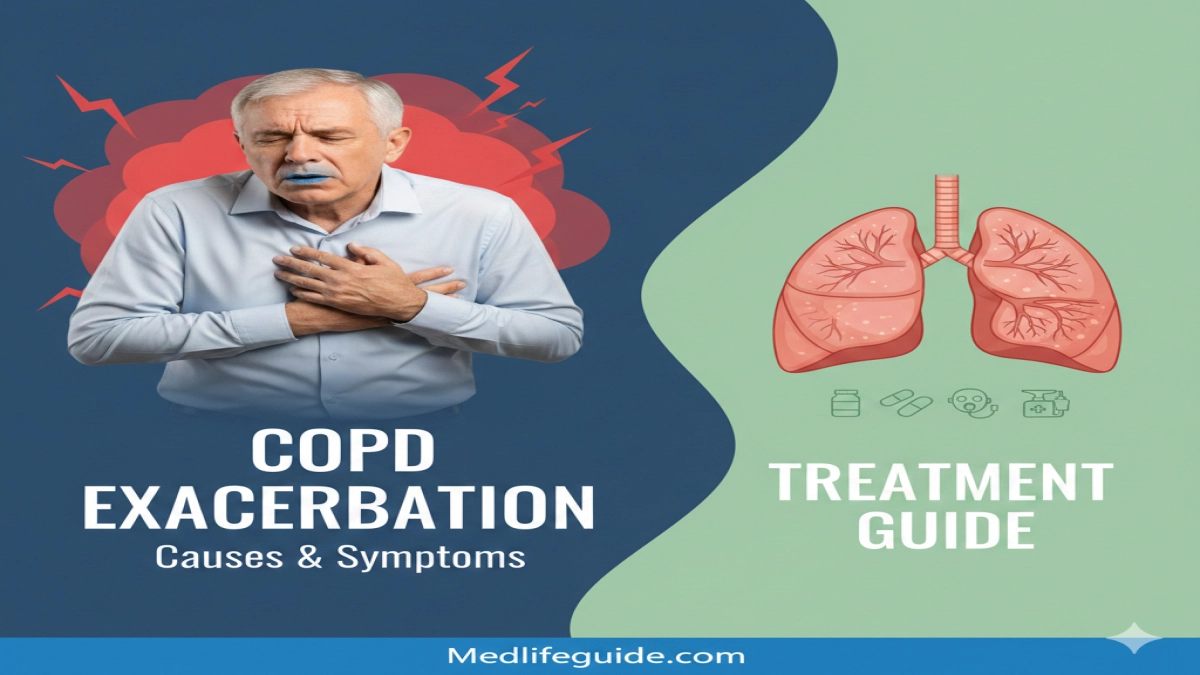
Overview of COPD Exacerbation
A COPD exacerbation is an acute, sustained worsening of respiratory symptoms beyond normal day-to-day variation that necessitates a change in regular therapy. Exacerbations are central drivers of morbidity, mortality, accelerated lung-function decline, reduced quality of life, and health-care utilization in chronic obstructive pulmonary disease (COPD). Prompt recognition and evidence-based management reduce complications and recurrence.
Exacerbations typically present with increased dyspnea, cough, sputum volume, and/or sputum purulence. Severity ranges from mild (managed with short-acting bronchodilators) to severe (requiring hospitalization or ventilatory support). Etiologies are heterogeneous and often multifactorial.
Epidemiology and Burden
COPD affects hundreds of millions worldwide and remains a leading cause of death. Exacerbations account for a large proportion of COPD-related hospital admissions and costs. Prior exacerbation history is the strongest predictor of future events, establishing a high-risk phenotype that benefits from intensified prevention strategies.
Pathophysiology
During an exacerbation, airway inflammation intensifies with increased neutrophilic infiltration, mucus hypersecretion, bronchoconstriction, and ventilation–perfusion mismatch. Infectious triggers amplify cytokine release and oxidative stress, while noninfectious insults (e.g., pollution) provoke airway hyperresponsiveness. Systemic inflammation may contribute to cardiovascular events and skeletal muscle dysfunction.
Common Triggers
Infectious Causes
-
Viral infections: rhinovirus, influenza, respiratory syncytial virus.
-
Bacterial infections: Haemophilus influenzae, Streptococcus pneumoniae, Moraxella catarrhalis.
-
Mixed infections are frequent.
Noninfectious Causes
-
Air pollution (particulate matter, ozone).
-
Temperature extremes.
-
Poor medication adherence or inhaler technique.
-
Pulmonary embolism, heart failure, or arrhythmias masquerading as exacerbation.
-
Iatrogenic factors (sedatives, beta-blockers in susceptible patients).
Clinical Presentation
Core Symptoms
-
Increased breathlessness.
-
Increased cough frequency or severity.
-
Increased sputum volume and/or purulence.
-
Wheeze or chest tightness.
Systemic Features
-
Fatigue, sleep disturbance.
-
Fever (more suggestive of infection).
-
Peripheral edema or orthopnea (consider cardiac comorbidity).
Severity Classification
-
Mild: Managed with increased short-acting bronchodilators.
-
Moderate: Requires systemic corticosteroids and/or antibiotics.
-
Severe: Requires emergency care, hospitalization, or ventilatory support.
Diagnostic Evaluation
Diagnosis is primarily clinical. Investigations are tailored to severity and differential diagnosis:
-
Pulse oximetry and arterial blood gases (moderate–severe cases).
-
Chest imaging if pneumonia, pneumothorax, or heart failure is suspected.
-
ECG and cardiac biomarkers when cardiac causes are possible.
-
Microbiologic testing in hospitalized or frequent exacerbators.
-
Spirometry is not performed during acute exacerbation but is essential in stable follow-up.
Management Strategies
Acute Pharmacologic Therapy
-
Short-acting bronchodilators: inhaled SABA with or without SAMA; frequent dosing initially.
-
Systemic corticosteroids: reduce recovery time and treatment failure; typical course is short (e.g., 5–7 days).
-
Antibiotics: indicated with increased sputum purulence plus dyspnea or sputum volume, or when mechanical ventilation is required.
Oxygen and Ventilatory Support
-
Controlled oxygen therapy targeting appropriate saturation to avoid hypercapnia.
-
Noninvasive ventilation (NIV): first-line for acute hypercapnic respiratory failure; reduces intubation and mortality.
-
Invasive ventilation: reserved for NIV failure or contraindications.
Adjunctive Measures
-
Thromboprophylaxis in hospitalized patients.
-
Early mobilization and pulmonary hygiene.
-
Review and correction of inhaler technique.
Post-Exacerbation Care
-
Optimize maintenance inhaled therapy.
-
Smoking cessation interventions.
-
Vaccinations (influenza, pneumococcal as indicated).
-
Pulmonary rehabilitation initiation after stabilization.
-
Written action plan and follow-up within 2–4 weeks.
Prevention of Future Exacerbations
-
Long-acting bronchodilators (LABA/LAMA) and inhaled corticosteroids in selected patients.
-
Adherence monitoring and inhaler education.
-
Management of comorbidities (cardiovascular disease, GERD, anxiety/depression).
-
Environmental risk reduction and infection prevention.
Complications
-
Accelerated decline in lung function.
-
Increased cardiovascular events.
-
Frailty and deconditioning.
-
Increased mortality risk, particularly with severe or frequent events.
Prognosis
Prognosis depends on baseline disease severity, exacerbation frequency, comorbidities, and response to therapy. A single severe exacerbation confers a sustained increase in future risk, underscoring the importance of secondary prevention.
Unique Clinical Takeaways
1) Symptom Discordance as a Risk Signal
Patients may underreport dyspnea while exhibiting objective deterioration (tachypnea, hypoxemia). Discordance between symptoms and physiologic markers should prompt early escalation, especially in older adults and those with prior hypercapnia. Incorporating home oximetry trends and caregiver observations improves detection.
2) Differential Diagnosis Drives Outcomes
A significant subset of presumed exacerbations are driven or compounded by cardiac pathology (acute heart failure, ischemia) or pulmonary embolism. Routine consideration of these entities in atypical presentations (disproportionate hypoxemia, chest pain, new edema) reduces missed diagnoses and shortens length of stay.
3) Eosinophil-Guided Therapy Nuance
Blood eosinophil counts can inform corticosteroid responsiveness in some patients. Low eosinophils may predict diminished benefit and higher infection risk, while higher counts suggest greater steroid responsiveness. This supports individualized steroid decisions rather than uniform dosing.
4) Patient-Experience Factors Affect Recurrence
Health literacy, inhaler technique mastery, and access to rapid care pathways materially influence recurrence. Structured discharge education with teach-back and a clear action plan lowers early relapse rates.
Medical Disclaimer
This article is for informational purposes only and does not constitute medical advice, diagnosis, or treatment. Clinical decisions should be made by qualified health-care professionals based on individual patient circumstances and current guidelines.
Leave a Reply