
Table of Contents
ToggleQuick Answer
No. COPD (chronic obstructive pulmonary disease) cannot be cured. Lung damage is permanent. However, treatment can slow disease progression, reduce symptoms, and improve quality of life.
What Is COPD?
COPD is a long-term lung disease that blocks airflow and makes breathing difficult. It mainly includes:
- Chronic bronchitis (long-term cough with mucus)
- Emphysema (damage to air sacs in the lungs)
The disease worsens over time if not managed.
Key Medical Fact
According to the National Heart, Lung, and Blood Institute (NHLBI), COPD causes irreversible airflow limitation due to structural lung damage.
Can COPD Be Cured?
Direct Medical Answer
COPD cannot be cured because:
- Lung tissue damage cannot regenerate fully
- Airways remain inflamed and narrowed
- Structural changes in lungs are permanent
Evidence-Based Explanation
Research published in peer-reviewed respiratory journals confirms:
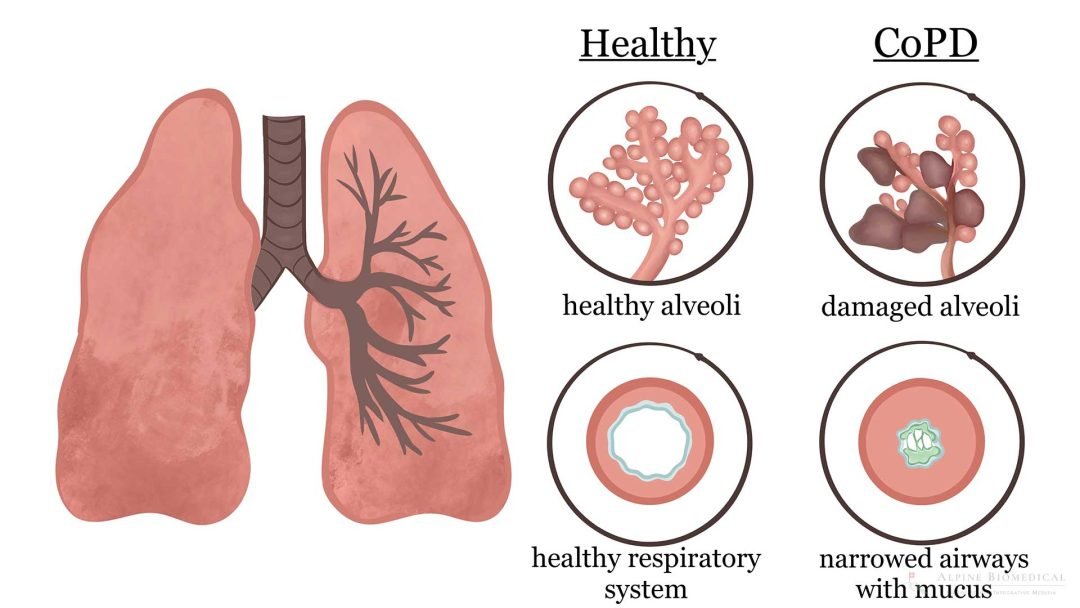
- Emphysema destroys alveoli (air sacs), which do not regrow
- Chronic inflammation leads to permanent airway remodeling
- Even with treatment, airflow limitation remains
Why COPD Cannot Be Reversed
1. Permanent Lung Damage
The alveoli lose elasticity and collapse, reducing oxygen exchange.
2. Chronic Inflammation
Ongoing inflammation thickens airway walls.
3. Airway Narrowing
Mucus buildup and swelling block airflow.
4. Reduced Repair Ability
Lung tissue has limited regenerative capacity compared to other organs.
Symptoms of COPD
Common symptoms include:
- Shortness of breath (especially during activity)
- Chronic cough
- Excess mucus production
- Wheezing
- Chest tightness
- Frequent lung infections
Disease Progression
Symptoms worsen gradually, often over years.
What Treatments Can Do (Even Without a Cure)
Treatment focuses on control, not cure.
1. Medications
Bronchodilators
- Relax airway muscles
- Improve airflow
Inhaled Corticosteroids
- Reduce inflammation
- Lower flare-up risk
Combination Inhalers
- Provide dual benefits
2. Oxygen Therapy
Used in advanced COPD to maintain oxygen levels.
3. Pulmonary Rehabilitation
Includes:
- Exercise training
- Breathing techniques
- Nutrition guidance
4. Lifestyle Changes
- Stop smoking (most critical step)
- Avoid air pollution
- Maintain healthy weight
5. Vaccinations
- Influenza vaccine
- Pneumococcal vaccine
6. Surgical Options (Selected Cases)
- Lung volume reduction surgery
- Lung transplant
Can COPD Be Prevented?
Yes, in many cases.
Main Prevention Methods
- Avoid smoking
- Reduce exposure to dust and chemicals
- Use protective equipment in workplaces
Key Fact
The Centers for Disease Control and Prevention (CDC) states smoking causes most COPD cases.
Stages of COPD
Doctors classify COPD into stages based on airflow limitation:
| Stage | Severity | Description |
|---|---|---|
| Stage 1 | Mild | Minimal symptoms |
| Stage 2 | Moderate | Noticeable breathlessness |
| Stage 3 | Severe | Frequent symptoms |
| Stage 4 | Very Severe | Life-threatening |
Unique Clinical Takeaways
1. Misdiagnosis and Overlap with Asthma
COPD is often confused with asthma, especially in early stages.
- Asthma is reversible; COPD is not
- Some patients have Asthma-COPD Overlap (ACO)
- Incorrect diagnosis delays proper treatment
Clinical implication: Spirometry testing is required for accurate diagnosis.
2. Role of Smoking Cessation Timing
Stopping smoking does not reverse COPD but significantly changes disease course.
- Early cessation slows lung function decline
- Late cessation still improves survival
- Continued smoking accelerates damage
Clinical insight: Lung function decline can normalize to near non-smoker rates after quitting.
3. Exacerbations Drive Disease Progression
COPD flare-ups (exacerbations) worsen long-term outcomes.
- Increase hospitalization risk
- Accelerate lung function loss
- Raise mortality risk
Actionable strategy: Preventing flare-ups is as important as daily symptom control.
4. Hidden Systemic Effects
COPD affects more than lungs:
- Heart disease risk increases
- Muscle weakness develops
- Anxiety and depression are common
Clinical implication: Treatment must be multidisciplinary.
5. Environmental and Biomass Exposure Risk
In low- and middle-income regions, COPD often develops without smoking.
- Indoor cooking smoke
- Poor ventilation
- Long-term exposure to biomass fuels
Clinical insight: Non-smoker COPD requires different prevention strategies.
Living With COPD
Daily Management Plan
- Use inhalers correctly
- Monitor symptoms
- Stay physically active
- Follow medical appointments
Warning Signs of Flare-Up
- Increased breathlessness
- Change in mucus color
- Fever or fatigue
Immediate medical attention is required.
Life Expectancy With COPD
Life expectancy depends on:
- Disease stage
- Smoking status
- Treatment adherence
- Overall health
Evidence-Based Indicator
The BODE index (Body mass, Obstruction, Dyspnea, Exercise capacity) predicts survival more accurately than lung function alone.
Can New Treatments Cure COPD in the Future?
Current Research Areas
- Stem cell therapy
- Regenerative medicine
- Anti-inflammatory biologics
Verified Status
Insufficient data to verify any current therapy can cure COPD.
All current treatments focus on management, not reversal.
When to See a Doctor
Seek evaluation if:
- Chronic cough lasts more than 3 months
- Shortness of breath increases
- Frequent respiratory infections occur
Early diagnosis improves outcomes.
Medical Disclaimer
This content is for informational purposes only and is based on evidence from recognized medical sources. It does not replace professional medical advice, diagnosis, or treatment. Always consult a licensed healthcare provider for medical concerns.